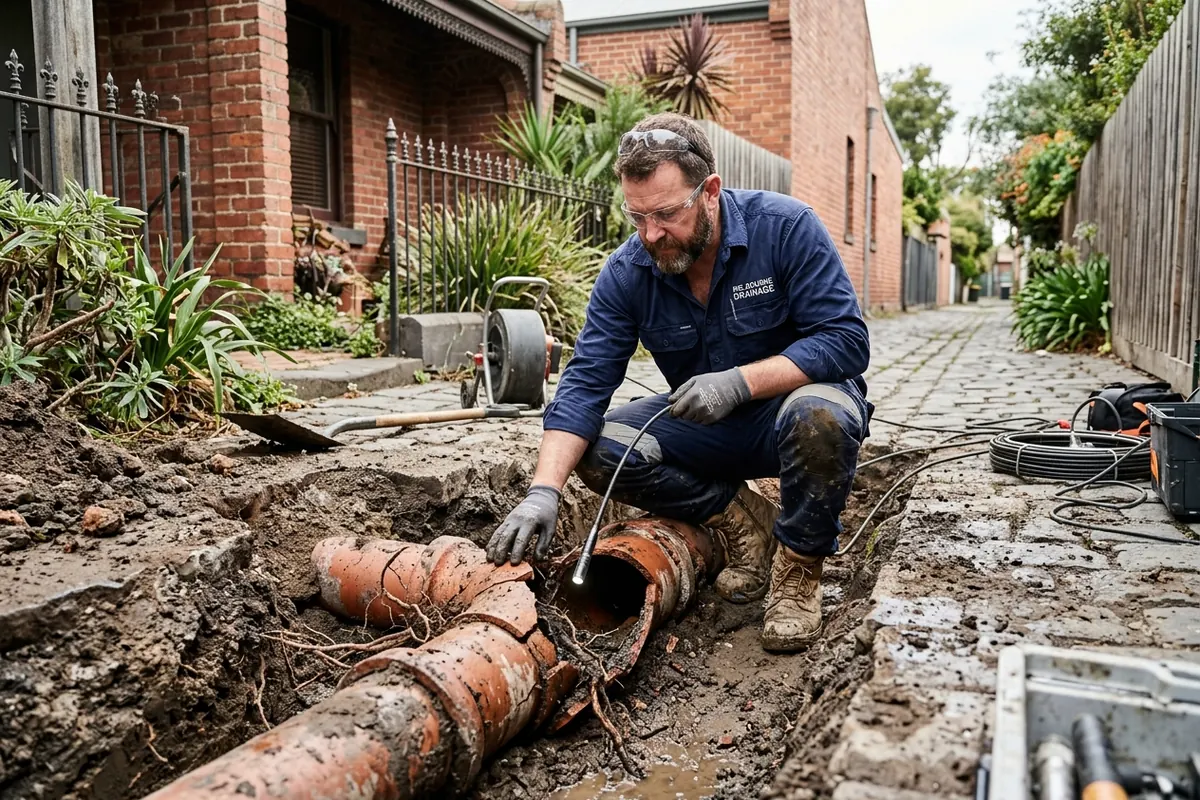
If you live in an inner Melbourne suburb (Richmond, Carlton, Fitzroy, Brunswick) and your house was built before 1975, your sewer pipes are probably terracotta. These pipes were the standard for decades. They have reached or are reaching the end of their service life. Here is what to watch for.
Recurring blockages
Terracotta pipes have joints every 600mm. Each joint is a potential entry point for tree roots. As the pipes age, the joints loosen and the entry points multiply. A common pattern is the same drain blocking every six months or so.
Slow drainage in multiple fixtures
When more than one fixture drains slowly, the main line is partially blocked. In terracotta pipes, this is often a sign of root intrusion at multiple joints, gradually narrowing the effective pipe diameter.
Smell from the yard
If you can smell sewer in your yard, especially after rain, you might have a broken or collapsed section of pipe leaking sewage underground. This is more common in old terracotta where ground movement has cracked the pipe over decades.
Sinkholes or depressions in the lawn
A small depression appearing in your lawn over the path of your sewer line can mean a collapsed pipe section. Soil washes into the broken pipe and the surface drops over time.
What CCTV usually shows in old terracotta
Roots at most or all joints. Cracks in some sections. Occasional fully collapsed sections. Joints offset from each other. This is normal end-of-life appearance for terracotta.
What to do
If your inspection shows light root activity and intact pipes: yearly maintenance jet to keep roots back. Cost a few hundred dollars a year and the pipes serve you for decades more.
If activity is moderate to severe: relining is usually the most cost-effective fix. $300 to $500 per metre, no digging.
If pipes are collapsed: excavation and replacement. Usually with PVC, which lasts 100+ years and is jointed in much longer sections.
When to do it
Best to address terracotta drain issues before they become emergencies. Storm season is the worst time to have a sewer backup. Spring or early autumn (when the soil is dry) is the best time for relining or excavation work.